
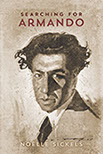
Searching for Armando
Plot Summary
SEARCHING FOR ARMANDO examines three real lives and how they intersected. One reviewer called it “a remarkable creation, encompassing a dazzling range of genres: memoir, biography, cultural history, mystery, and detective story.”
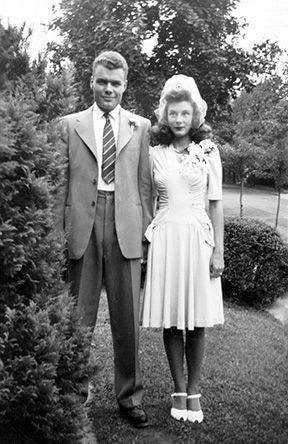
In 1945, a young wife awaits the return of her high school sweetheart from the battlefields of World War II. When he arrives, she will face him with the severest test of their marriage. Because in his years-long absence, she has fallen in love with another man. This classic situation takes on its own particular trappings, and the decision of the young couple reverberates through their decades together and through the lives of their children, especially the first-born, who is the author of SEARCHING FOR ARMANDO.
There are facts in this book, and there are truths. There are guesses and opinions and memories. It’s a story of secrets --- secrets harbored privately in individual hearts; secrets kept tightly within families; secrets unearthed or still stubbornly elusive. Intentionally or not, clues were left behind. SEARCHING FOR ARMANDO follows the trail of those clues, at times to surprising conclusions.
Hatching the Idea
My husband is fond of saying that I’ve been writing this story for 30 years. I always bristle when he says that because it makes me sound like the world’s slowest writer, but metaphorically, he’s right. The writing of the book was concentrated in the few years before its publication in 2016, but the first stirrings began in 1976, and the story I eventually uncovered stretches back years before then.
In 1976, my marriage was in trouble. When I wrote to my mother about it, she responded with a surprising confession: early in her own marriage, with my father overseas during World War II, she’d had an affair that eventually forced her to choose between her young husband and her man-of-the-world lover.
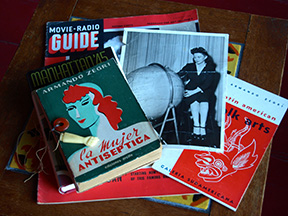
In 1980, after my mother’s death, I discovered, in the back of her closet, a plastic bag with a 1945 photo labeled Armando Zegrí, four notes to her signed A., and a copy of a long letter from her to him. The bag also contained a number of short stories and an unfinished novel by my mother. The contents of that plastic bag set me on a search that would last years, and that would include personal interviews, library work, and Internet scouring, and would lead me to sources in New York, California, Chile, Mexico, and Paris.
Finally, faced with a big, unorganized box filled with scribbled notes, photocopied documents, old letters and older photos, I decided to write a summary of my findings. This I accomplished in four dry pages. But then I started to think (always dangerous for a writer): I ought to explain that event a little more, I ought flesh out those relationships, I ought to clarify the time line, and so on, until, after more research and much more writing, my terse summary grew into a book. In the course of trying to find out who, exactly, Armando Zegrí had been, I realized that I wanted to learn more about who my mother and father had been as well, and where each of the three of them had come from before their lives intersected. So my collection of facts and discoveries and educated guesses became a triple biography, with a dose of memoir thrown in.
Copyright © 2015 - 2026 Noëlle Sickels | site design by
All photography is the original work of Annie Carmona and cannot be copied or reproduced without permission.